
He Was 24. The App Kept Dealing.
Ray M. was 24 years old when he started betting on sports from his phone. At first, the bets were small. Then they got bigger. Over time, he lost hundreds of thousands of dollars.
Ray died by suicide.
His family shared his story with the Pittsburgh Post-Gazette in September. Now that story is pushing Pennsylvania to take a harder look at sports betting. Meanwhile, the betting industry still calls what it sells "entertainment."
This Isn't Rare Anymore
Ray's story is heartbreaking, but it is not a one-off. Studies show that about 1 in 5 people with a gambling disorder attempt suicide. That is one of the highest rates of any addiction.
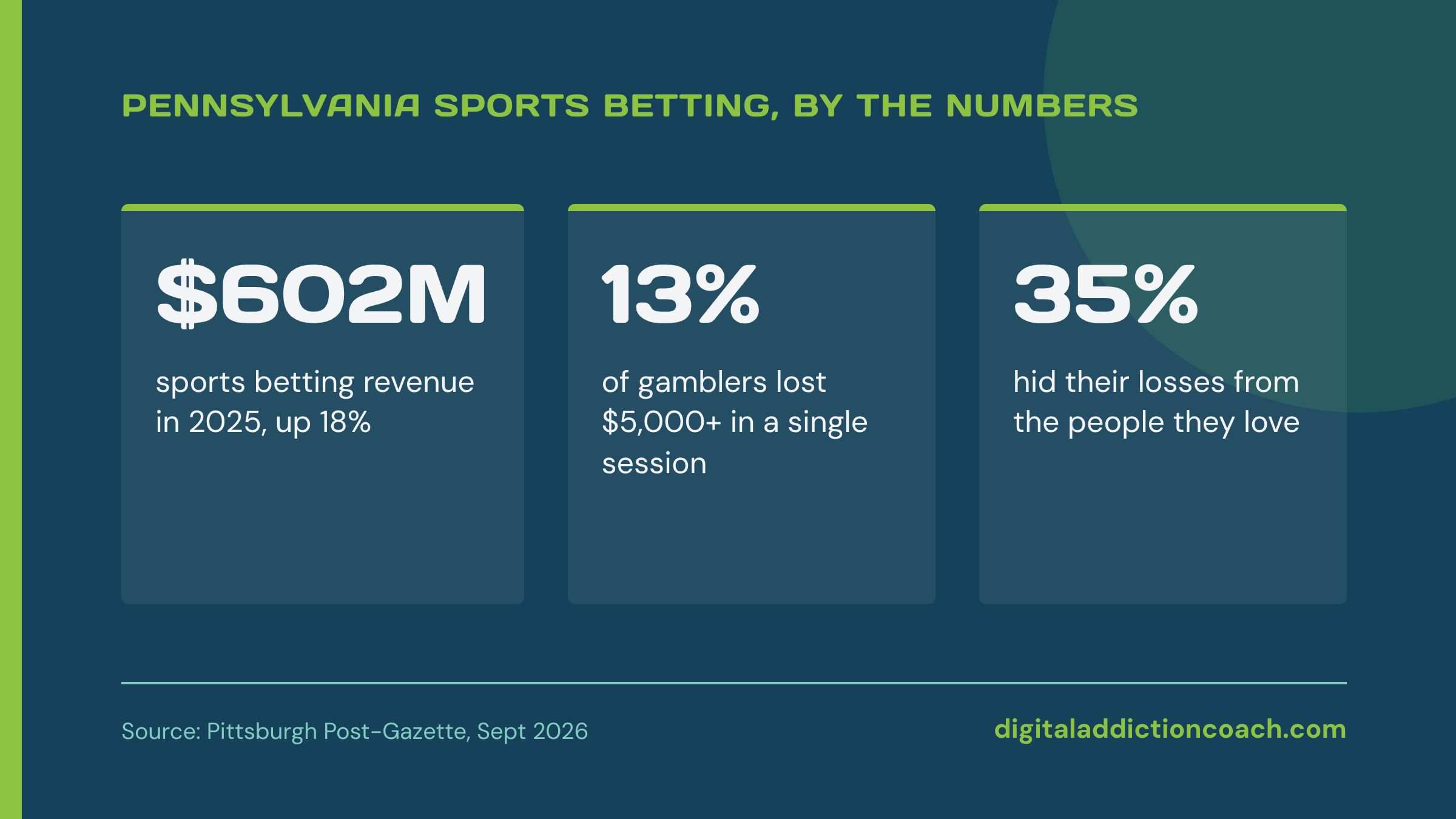
Pennsylvania's own numbers show how fast the problem is growing. Sports betting brought in $602 million in 2025, up 18%. 13% of gamblers lost $5,000 or more in a single session. 35% hid their losses from the people they love. Calls to the gambling hotline from 18 to 24 year olds nearly doubled in ten years.
Ron Yurko, a professor at Carnegie Mellon, says the apps don't have enough "guardrails" or "friction." In plain English, the app makes it easy to keep losing and hard to stop.
The Number That Stopped Me
35% hid it. That is not just a statistic. That is a real person, and it might be you.
Maybe you tell yourself you're up overall, but you've never actually added it up. Maybe you delete the app on Monday and download it again on Saturday. The biggest danger isn't only the money. It's the secret. Shame grows when you keep it hidden, and after a while it can feel like there's no way out.
There is a way out. I'm living proof. The day I finally told someone I had a problem and asked for help is my day zero. Before that day, I lived a double life full of hiding, lies, and shame. After that day, colors looked brighter and food tasted better. For the first time in years, I wasn't alone.
A Quick Gut Check
How many of these sound familiar?
You bet on games you don't even watch.
You've never added up your wins and losses, on purpose.
You chase losses to "get even."
You hide the real number from your wife, girlfriend, or parents.
You've felt trapped, hopeless, or like a burden to others.
If that last one describes you, please stop reading and call or text 988 right now. It's free, and you can reach someone any time, day or night.
One Move to Make Today
Add it up. Go back through the last 12 months and count every deposit, every withdrawal, and every app. Don't round it down. Don't explain it away. That number is the first honest thing the app can't hide from you.
You Don't Have to White-Knuckle This
R.A.D.D. is my private, one-on-one recovery program for adults who are done losing. You get real tools, accountability between sessions, and blocking software to protect you while you rebuild. Faith-based or not, your call.
The first step is a free Digital Reboot Call. It's private, confidential, and judgment-free.
Book Your Free Digital Reboot Call
If you're in crisis, call or text 988 to reach the Suicide and Crisis Lifeline. For gambling help, call or text the National Problem Gambling Helpline at 1-800-522-4700.


