
The Comorbidity Data Your Screening Might Be Missing
Therapists, here's a data point worth adding to your intake conversations.
What the Study Found
A poster at the 2025 APA Annual Meeting, reported by Psychiatric Times, looked at problematic internet use in adults who screened positive for borderline personality disorder (BPD).
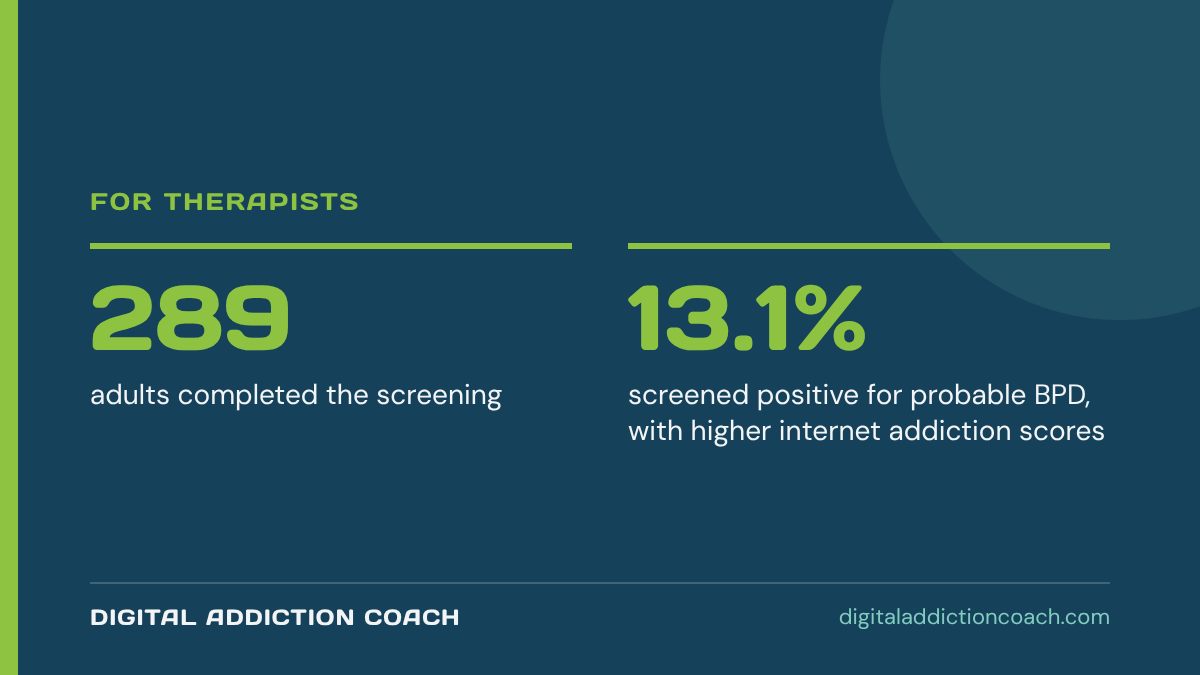
The sample was small. 289 adults completed the screening tool. But the pattern was clear. Of that group, 13.1% screened positive for probable BPD. Those people scored much higher on a standard internet addiction measure than those who didn't.
The details matter for referrals:
People with probable BPD were more likely to report frequent porn use and more frequent dating app use.
Younger people with BPD also reported more surfing, streaming, and online gaming.
In a related analysis from the same research group, adults with BPD were much more likely to screen positive for compulsive sexual behavior disorder than for other impulse problems like compulsive buying or gambling.
What This Does and Doesn't Mean
Let me be clear. This does not show that problematic internet use causes BPD, or that BPD causes porn addiction. The researchers say more work is needed to sort out which way that link runs. What it does show is a pattern of overlapping conditions that clinicians should have on their radar.
If a client shows BPD traits, like impulsivity, mood swings, and unstable relationships, screening for problematic internet or sexual behavior isn't a stretch. The data supports it.
Where I Fit In
This is exactly the gap I fill for your clients. You do the clinical work on personality structure, emotion regulation, and relationship patterns. I handle the behavior layer between sessions. That means real-time accountability for specific compulsive digital behaviors, device-level boundaries, and a structured program your client can't out-talk in fifty minutes a week.
I've had several clients whose digital addiction or habits were covering up a separate mental or physical problem. Once they were digitally sober, they noticed things that had been hidden until then, and they got help for them. In other words, they were using their addiction to self-medicate a problem they didn't know they had.
Let's Talk
Do you have a client whose digital or sexual compulsions are moving faster than weekly sessions can handle? That's exactly where I come in. Have a client who needs accountability between sessions?


