
Stop Gambling Part 1: Do this now
Does this sound familiar?
You promised yourself, "Never again." Then the game starts, the phone is right there, and that promise folds like a stack of cards in a hurricane.
Here is the truth. Willpower is a terrible defense against gambling, porn, or any digital addiction. I'm not judging you. I'm with you. As a recovering addict, I know that once we have done something over and over for weeks, months, or even years, we will do almost anything to keep doing it.
Here are three hard truths I had to face:
As addicts, we lie. We use our willpower to get what we want, not to stop.
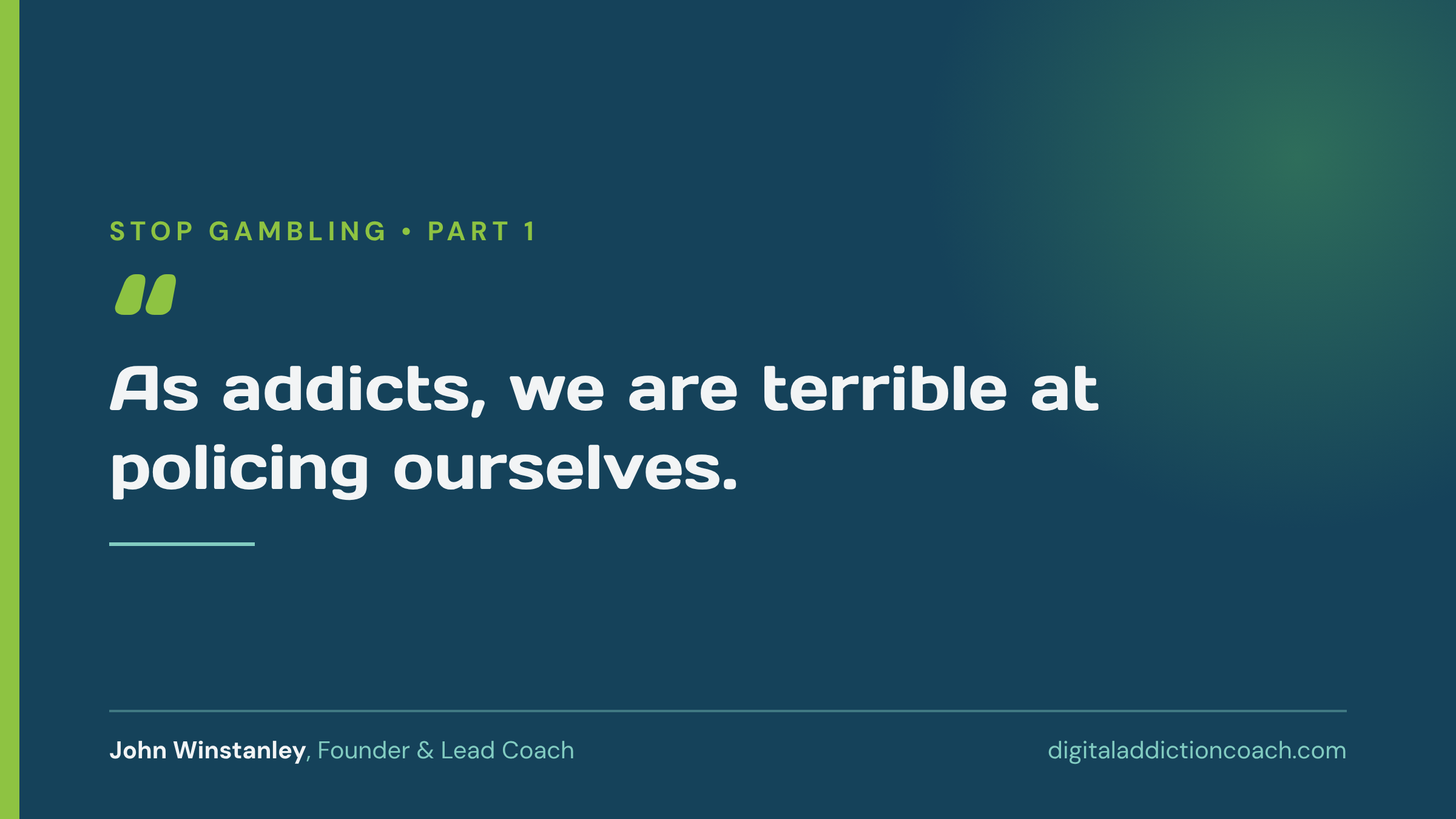
As addicts, we are terrible at policing ourselves.
As addicts, we feel awful after we use.
Be honest. How many apps have you installed to help you stop, only to turn them off the moment the urge hit? (I wrote more about this in Why Willpower (and Apps Alone) Won't Save Your Relationship.)
Phase 1 Is Accountability
So stop relying on willpower that is already worn out. Bring in outside accountability: someone whose willpower you can lean on when yours is weak.
That is Phase 1 of recovery. Drop the chip off your shoulder and ask for help.
Then use that help to put as many walls as you can between you and the next bet. Your brain needs time to heal, and walls buy that time. Here are three moves to make today with the person you asked for help.
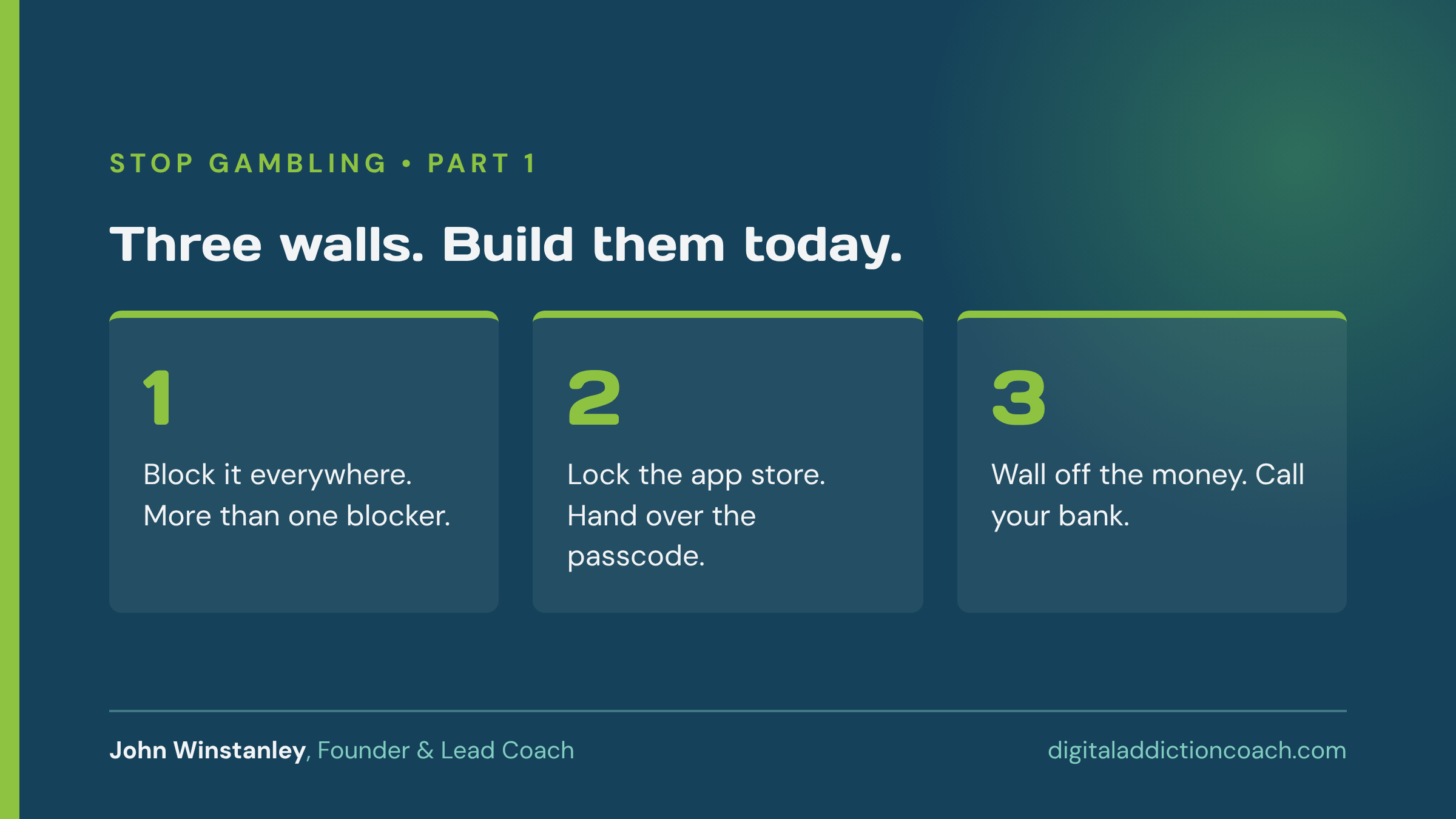
Move 1: Block It Everywhere With More Than One Blocker
One blocker won't catch everything. Prediction market apps call themselves "trading," and sweepstakes casinos call themselves "games," so some of them slip right through. These apps are built to pull you back in. (Read Your Betting App Is Not Your Friend to see how.) That is why you layer your blocks:
Your devices: Install a gambling blocker like Gamban or BetBlocker (it's free) on your phone, laptop, and tablet.
Your router: Turn on filtering for your home Wi-Fi so every device in the house is covered, even the old iPad in the junk drawer.
Your state: Sign up for your state's self-exclusion list. Licensed sportsbooks then have to keep you out.
Then test it. Try to open a betting site on every device. If it loads anywhere, you are not done.
Move 2: Lock the App Store
Blockers usually fail for one reason: you can delete them. Or you download a new app the blocker doesn't know about yet. Here is how to fix that:
Turn off app installs and app deletions on your phone. On an iPhone, you will find this in Screen Time.
Give the passcode to someone you trust, like your spouse, a friend, or a sponsor. Just not you.
You can't download what you can't install. Does that sound extreme? So is losing your house.
Move 3: Put Walls Around the Money
No money means no bet. It really is that simple. Call your bank today and ask these three questions:
Can you block gambling transactions on my cards?
Can you remove overdraft protection and lower my daily limits?
Can I give someone view access to my statements?
Then close the side doors:
Remove saved cards from PayPal, Venmo, and Cash App.
Lock down crypto purchases.
Watch for sweepstakes casinos, because they often don't show up as "gambling" on a statement.
Is it an awkward phone call? Sure. But five awkward minutes beats losing five figures.
This Is Part 1 of 3
Accountability builds healthy margin into your life, and that margin is what leads to recovery. Blocking the bet stops the bleeding, but it doesn't heal the wound. Here is what comes next:
Want It Done Right the First Time?
This is why R.A.D.D. works. We do all of this with you, every step of the way.
We are your 24/7 accountability partner. That means blocking software on every device, a monitored credit card, word-for-word scripts for calling your bank, and a plan to rebuild your savings account. Then we do the deeper work, so the walls aren't the only thing holding you up.
It's private and one-on-one, and you choose faith-based or not.
Start with a free Digital Reboot Call: Book Your Free Digital Reboot Call
If you're in crisis, call or text 988, the Suicide and Crisis Lifeline. For gambling help, call or text the National Problem Gambling Helpline at 1-800-522-4700.


