
Stop Gambling Part 3: Rebuild Your Money, Trust, and Life
The bets have stopped...
...and the urges are getting quieter. Now look around.
There's the credit card balance. There's the savings account that isn't there anymore. And there's the look on your wife's face when you say, "Trust me."
This is the part most people skip, and it's a big reason so many relapse. The pain of being rejected by loved ones who have been lied to one too many times is a massive trigger.
Quitting is the start. Rebuilding is the win.
Once you have worked with your accountability partner to block the apps (Part 1) and learned to surf the urges (Part 2), the constant craving for that next hit starts to calm down, and you begin to think clearly again.
I remember that feeling. I swear food tasted better, and colors looked brighter.
Now the real work begins: rebuilding your life. To keep this a quick read, I'll focus on three areas: your money, your relationships, and your future.
Rebuild 1: Face the Money
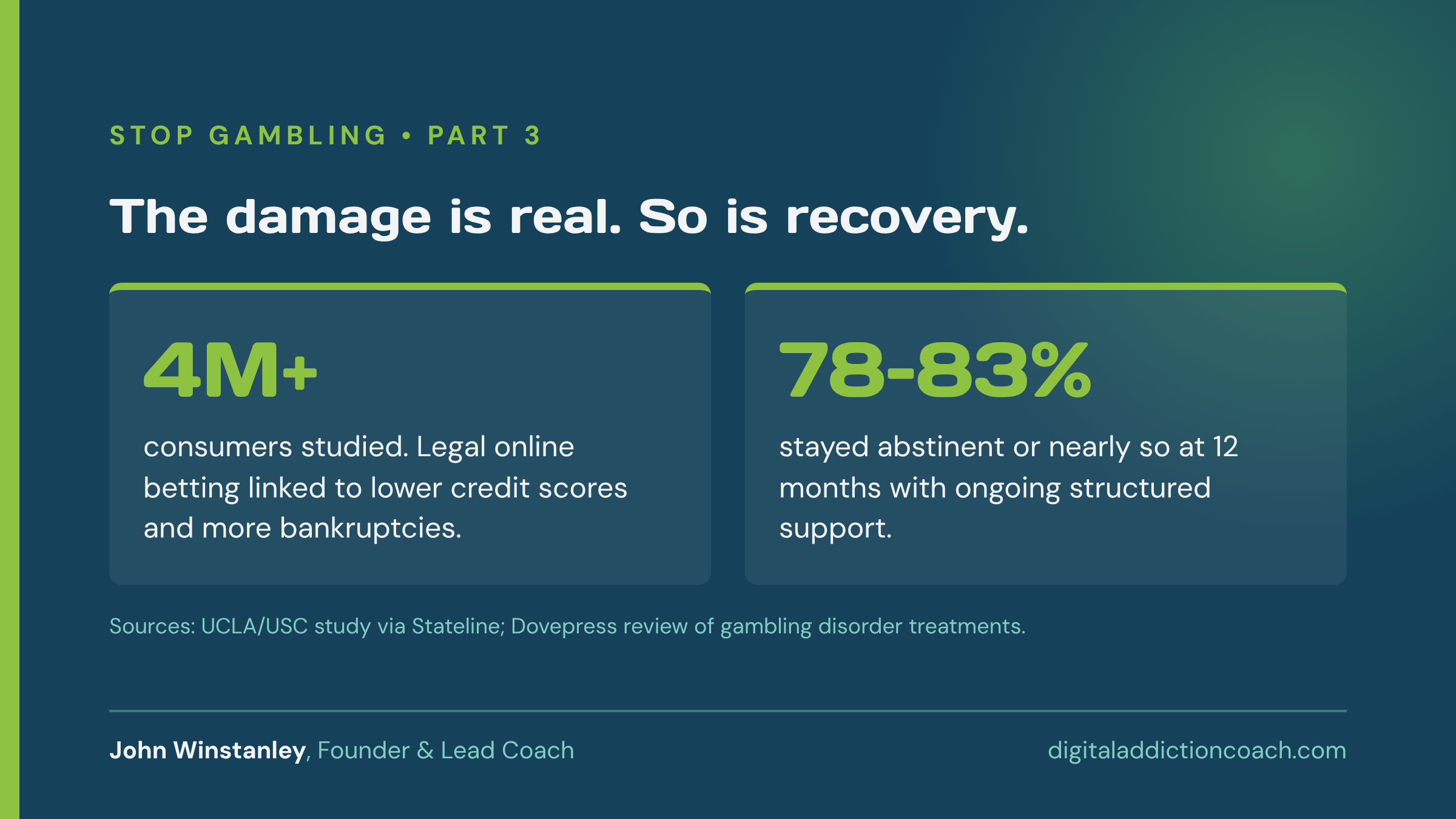
The damage is real. Research on more than 4 million consumers linked legal online sports betting to lower credit scores and more bankruptcies.
So face it on paper:
List every debt, with its balance, interest rate, and minimum payment.
Call your creditors before they call you. Many have hardship plans, so ask.
Get help. GamFin (gamfin.org) offers financial counseling for people affected by gambling.
Open a savings account, even if you only add $10 a week. It's not about the amount. It's about proving money can stay put.
And keep the money walls from Part 1 up. Rebuilding is not the time to take them down.
Rebuild 2: Earn the Trust Back
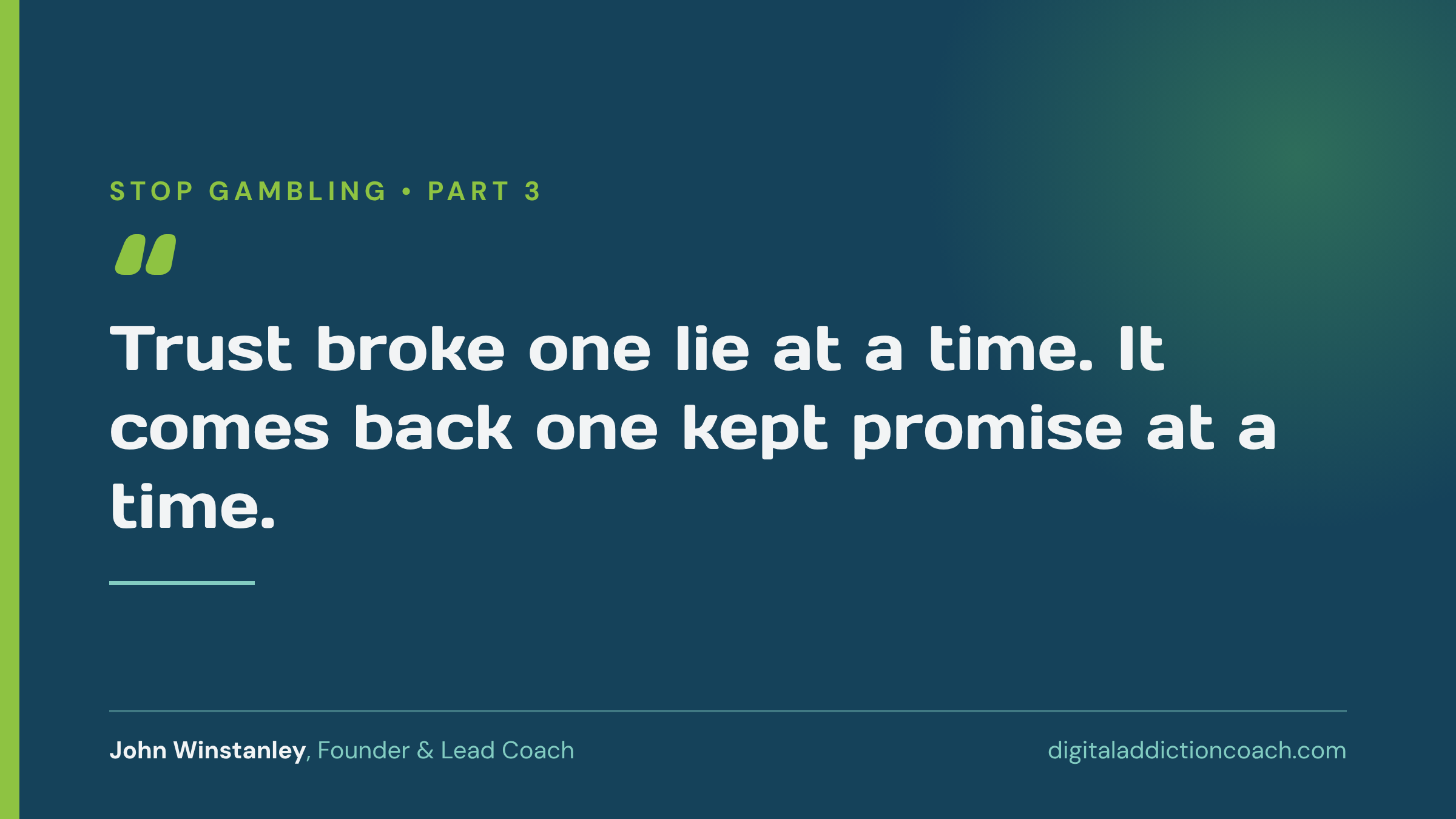
Trust broke one lie at a time, and it comes back one kept promise at a time.
Be fully open about money. Your partner sees the statements. That's not because you're a child. It's because you're rebuilding. Drop the chip off your shoulder. It will be OK. Keep your eye on the prize.
Don't put forgiveness on a timeline. That's theirs to give.
Keep small promises. Be home when you said you would. Call when you said you would. Every time.
Do small acts of kindness. Fill your partner's emotional battery instead of draining it. Here's one idea I used: buy four blank greeting cards, write a short note in each, and mail them to your own house, one per week. People love getting good old-fashioned snail mail.
Your partner is healing too. Send them Why Willpower (and Apps Alone) Won't Save Your Relationship. And if you're wondering how much to tell them, read Tell Me Everything or Tell Me Nothing? Neither.
Rebuild 3: Fill the Hole
Gambling took your hours, your nights, your weekends, and your headspace. If you leave that space empty, the urge will move back in.
Go back to something you loved before the apps, like the guitar, golf, or the truck in the garage.
Move your body every day.
Find your people, because nobody recovers alone.
Then ask yourself one question: What kind of life would I never want to escape from?
Build that.
Support Is the Secret Weapon
Here's what the research shows. With relapse prevention and ongoing structured support, 78 to 83% of people stayed abstinent or nearly abstinent at 12 months.
Support is the difference. Not willpower. Support.
Walls, Skills, Life
That's the whole series in three words. Part 1: lock it down. Part 2: beat the urge. Part 3: rebuild.
This Is What R.A.D.D. Does
R.A.D.D. walks you through all three phases with one coach. You get the blocking setup, bank scripts, urge skills, a plan to rebuild your savings, and real accountability between sessions.
Every client who completes R.A.D.D. succeeds. Graduates move into T.H.R.I.V.E., our long-term accountability community, so the support doesn't stop when the sessions do.
It's private and one-on-one, and you choose faith-based or not.
Start with a free Digital Reboot Call: Book Your Free Digital Reboot Call
If you're in crisis, call or text 988, the Suicide and Crisis Lifeline. For gambling help, call or text the National Problem Gambling Helpline at 1-800-522-4700.
Sources: Stateline, growth of sports betting linked to financial woes; Dovepress, psychological treatments for gambling disorder.


