Stop Gambling Part 2: How to Beat the Urge When It Hits
In Part 1 you and your accountability partner built the walls. You put blockers and accountability blockers on every digital device, locked the app store, and put your money behind a gate.
Good. Now comes the hard part, because the urge still shows up.
It's Sunday at 12:55, and kickoff is in five minutes. Your thumb is twitching, and your brain is screaming, "Just one."
Here's what nobody tells you. As we talked about in Part 1, addicts are the worst at policing themselves, and your willpower is worn down. Blockers help, but they don't catch everything. So how do you get through the urge itself?
Why the Urge Feels So Big
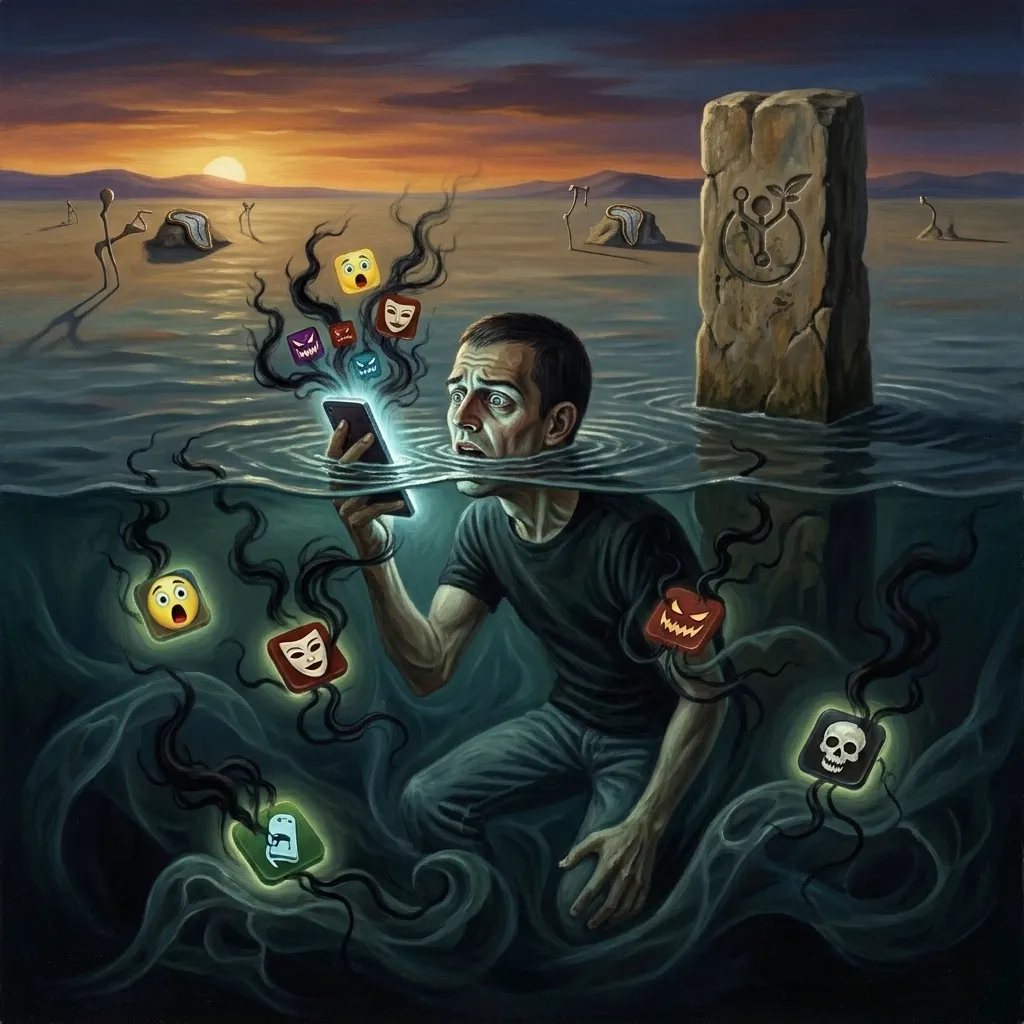
Your brain isn't broken. It has been trained. Betting apps are built to do exactly this. (I wrote more about that in Your Betting App Is Not Your Friend.)
Here's the twist: dopamine, the brain's "go get it" chemical, peaks before the result, not after. The waiting is the drug.
Near misses make it worse. When your parlay misses by one leg, your brain lights up almost like it won, so you go again. For problem gamblers, even losing can fire up the brain's reward system. That's the science behind chasing losses.
So when the urge hits, you are not weak. A trained loop is asking for its fix. You can't argue with a trained loop, but you can outlast it.
The waiting is the drug. Dopamine peaks before the result, not after.
Move 1: Surf the Urge Instead of Fighting It
Urges act like waves. They build, they peak, and they break, every single time. If you fight an urge, it gets bigger. If you feed it, it comes back stronger. Surfing it is the third option. Here's how:
Name it out loud: "This is an urge. It will pass."
Find it in your body. Is it a tight chest, a clenched jaw, or restless hands?
Breathe slowly. Breathe in for four counts and out for six.
Watch it rise, watch it peak, and watch it fall.
It isn't magic. It's a skill, and it gets easier every time you use it. The research backs this up. A small pilot study found that mindfulness-based CBT reduced gambling symptoms. It was a small study, but it points in the right direction.
Move 2: Know Your Danger Zones
Urges don't show up at random. They show up on a schedule: kickoff, payday, a fight with your wife, a bad day at work, or 11 PM when you're alone and can't sleep.
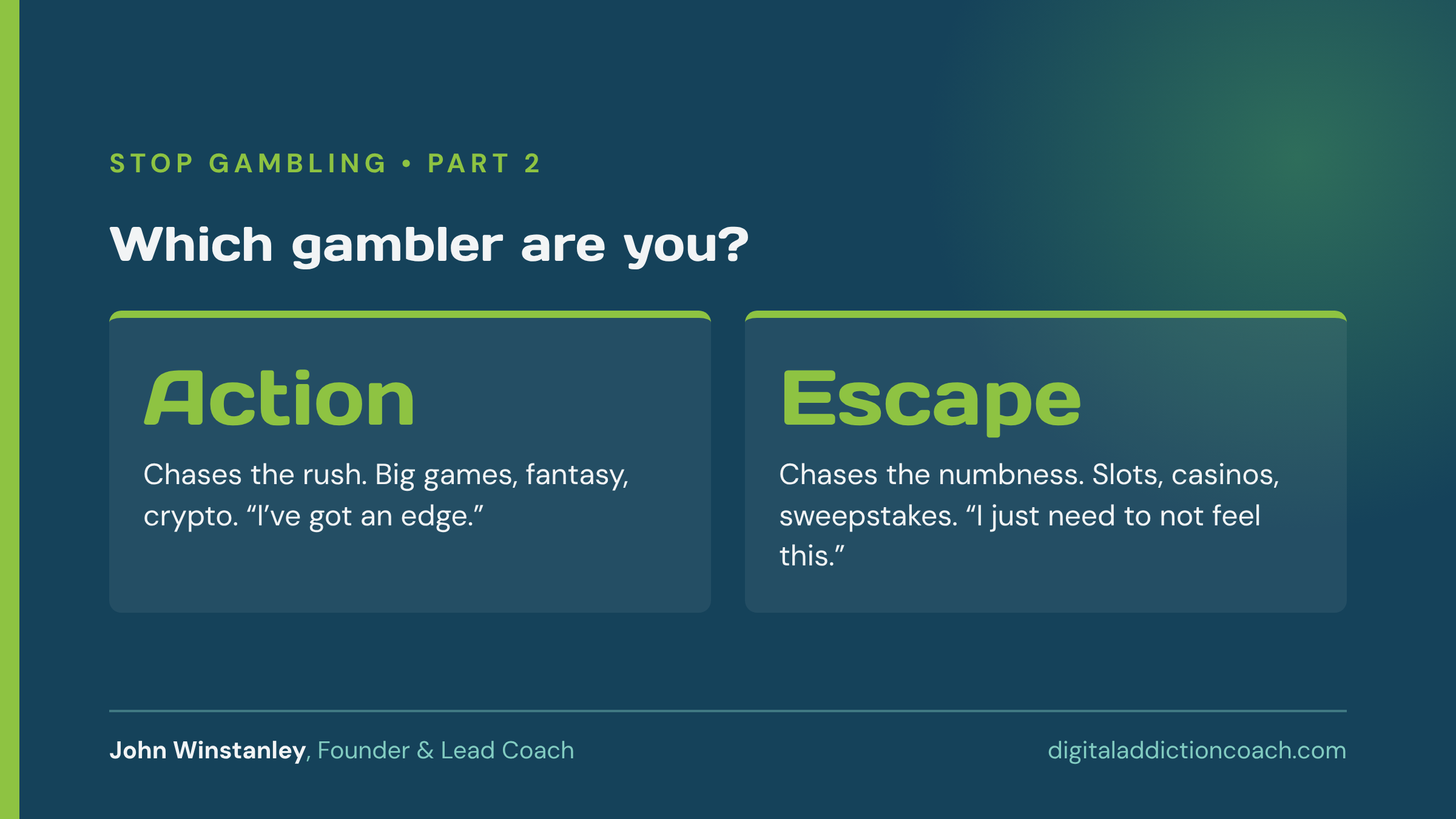
It also helps to know which kind of gambler you are:
Action gamblers chase the rush. Think big games, fantasy sports, and crypto. Their story is, "I've got an edge."
Escape gamblers chase the numbness. Think slots, online casinos, and sweepstakes. Their story is, "I just need to not feel this."
Now write down your top three danger zones. For each one, plan something you can't bet through, like the gym, a call with a friend, a walk without your phone, or watching the game with someone who knows your story.
Stress is rarely the whole story, by the way. Read It's Not Stress Making You Scroll. It's Temptation.
Move 3: Call Before You Click
The urge loves secrecy and hates daylight. Pick one person and tell them, "When I text you the word 'wave,' call me." That's it. One word, and no explanation needed.
Most urges die in a five-minute conversation. That's not because your friend says something brilliant. It's because you broke the secret. Secrets are what turned Ray M.'s story into a tragedy. Read He Was 24. The App Kept Dealing.
Walls Plus Skills
Here's the math. Walls buy you time, and skills help you use that time well. You need both.
Next up is Part 3: rebuilding your money, your trust, and your life.
You Don't Have to White-Knuckle This
R.A.D.D. teaches these skills one-on-one using CBT, ACT, DBT, and mindfulness, plus the blocking setup from Part 1. You also get accountability between sessions, so you're not alone at 12:55 on a Sunday.
It's private, and you choose faith-based or not.
Start with a free Digital Reboot Call: Book Your Free Digital Reboot Call
If you're in crisis, call or text 988, the Suicide and Crisis Lifeline. For gambling help, call or text the National Problem Gambling Helpline at 1-800-522-4700.


